Service Pages
Separate the major roofing services so each page can answer specific buying questions.
Tampa Bay Contractor Marketing
Roofing contractors need pages for roof repair, replacement, inspections, storm concerns, project proof, and local estimate paths.

Customers looking for roofing contractors want to know what work is offered, where the company works, how estimates start, and what proof supports the business.
For roofing companies, the website should make repair, replacement, residential roofing, commercial roofing, and storm inquiries easy to understand without forcing visitors through generic marketing language.
FounderRock organizes those details so a visitor can choose the right path: call, form, inspection request, or a larger project consultation.
Separate the major roofing services so each page can answer specific buying questions.
Use photos, descriptions, materials, locations when confirmed, and before-and-after examples where appropriate.
Shape forms and calls around the information needed for a useful inspection request.
Reference Tampa Bay naturally without pretending the business has offices in every city.
Measure calls, forms, ad clicks, and meaningful request actions.
Add new projects and adjust services as the company changes.
Local SEO for roofing contractors should focus on the services customers actually request. A page about repair should not read like a page about storm inquiries.
Google Business Profile work should align categories, services, photos, website links, and service areas with the real business. Profile updates should support the website rather than contradict it.
Local Services Ads may be available only for eligible businesses and locations. Google controls approval, screening, placement, and lead delivery.
Search advertising for roofing work should avoid broad, research-only searches when possible. Campaign groups can focus on service intent, urgent calls, and qualified project requests.
The best conversion path may be a call for urgent work or a form for planned work. For this trade, the primary path is usually an inspection request.
FounderRock separates ordinary page views from lead actions so the business can review calls, forms, and campaign activity with better context.
A roofing page should not depend on one generic contact button. It should explain which jobs are a fit, which details matter before scheduling, and how a customer can start without confusion.
For roofing contractors, proof usually works best when it connects the photo or project description to a specific service such as repair, replacement, or residential roofing. That helps the visitor see relevant work instead of a random gallery.
The request path should also match the sales cycle. A small repair may need a fast phone path, while a planned roofing project may need photos, address details, timing, budget context, and notes before a useful inspection request can happen.
FounderRock also checks whether the website should separate residential and commercial work, urgent and planned requests, or repair and replacement language. Those distinctions can make a roofing contractors page more useful than a broad trade overview.
After launch, the business can keep improving the page with completed roofing projects, service-area examples, seasonal notes, and better answers to questions heard on real calls.
FounderRock starts by reviewing the services, service area, current website, photos, estimate process, and Google presence for the roofing business.
Next, the website structure and content are shaped around the specific work: repair, replacement, residential roofing, commercial roofing, and storm inquiries.
After launch, project updates, tracking review, Google profile improvements, and campaign changes can be handled as ongoing Local Growth work.
SELECTED WEBSITE PROJECTS
These examples show website systems and project presentation, not guaranteed marketing results.
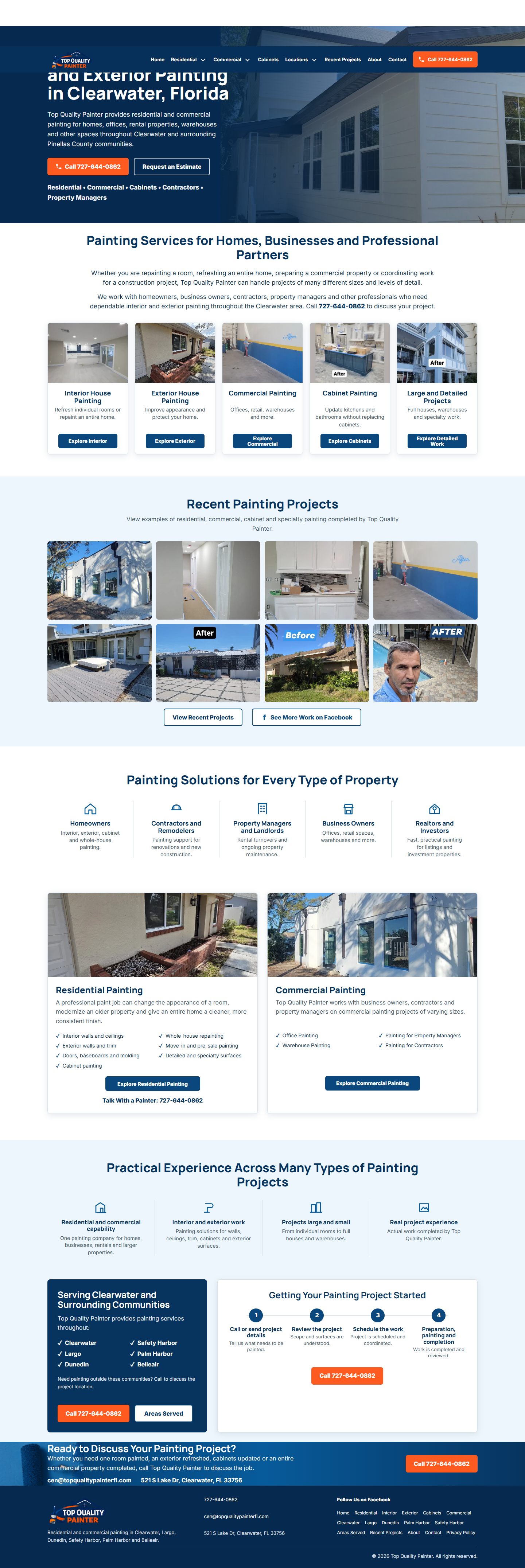 Top Quality PainterPainting ContractorLocal service website with real project photography, service pages, city structure, and call tracking.
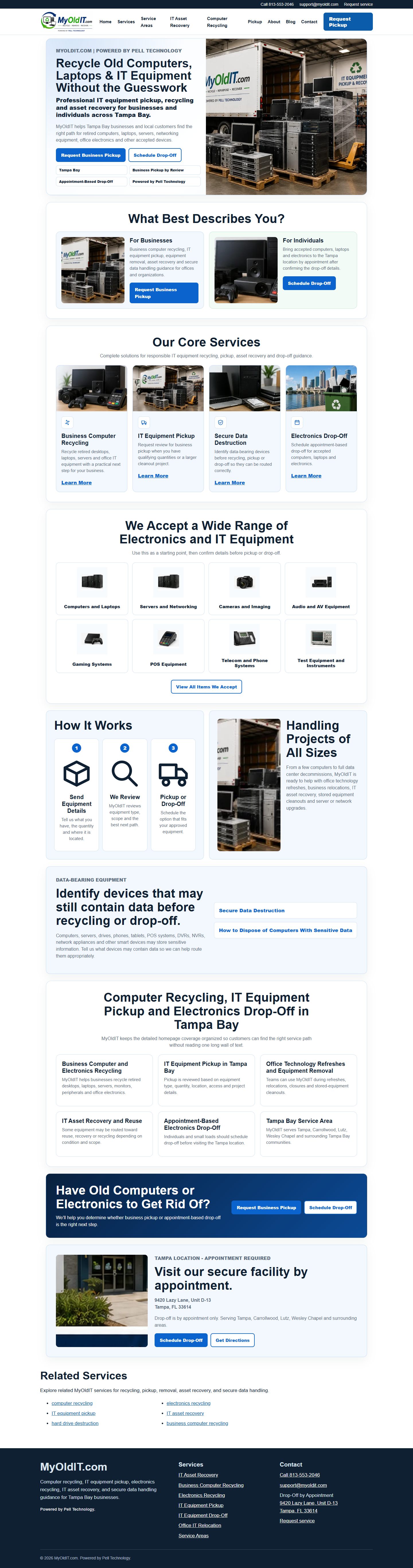 MyOldITElectronics Recycling and IT Asset RecoveryLocal SEO architecture with business and consumer paths, equipment pages, and conversion tracking.
 Pell TechnologyEnterprise IT Asset RecoveryB2B service architecture with enterprise positioning and secure equipment-recovery messaging.
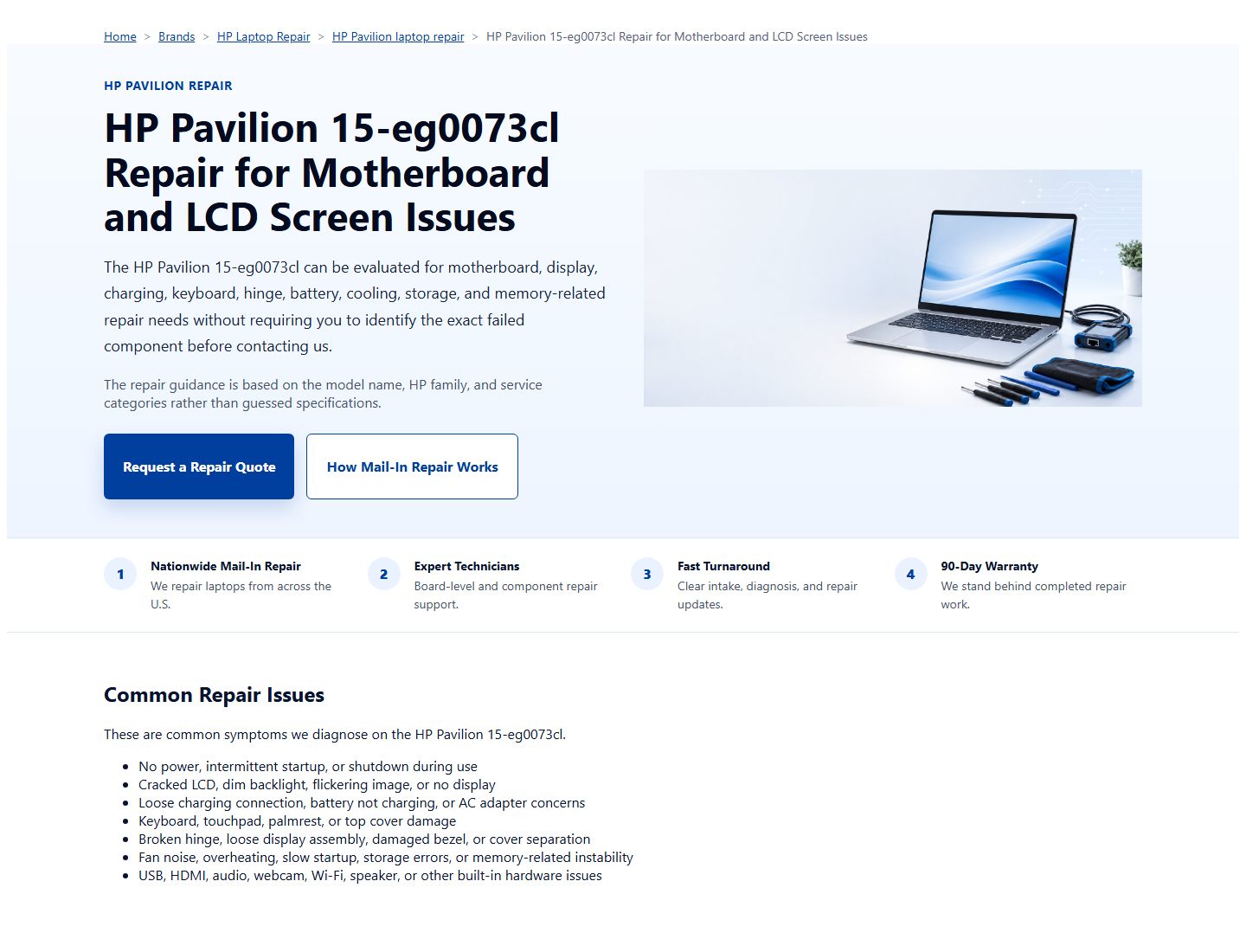 National Laptop RepairNational Mail-In Laptop RepairRepair-service hubs and model-specific SEO pages for a nationwide mail-in workflow.
Start with the website, care, or Local Growth level that matches the business and current workload.
Advertising charges are paid directly to Google through the customer’s own billing method. FounderRock bills management services separately.
It should explain core services such as repair, replacement, residential roofing, commercial roofing, and storm inquiries, show proof, make the service area clear, and provide a simple request path.
No. FounderRock avoids doorway pages and uses natural Tampa Bay service-area content unless a real page has a clear purpose.
Yes. For roofing contractors, material and inspection proof can help customers understand quality, scope, and fit before they contact the business.
It can when campaigns focus on service intent, use relevant landing pages, and track calls or forms correctly.
Sometimes. Eligibility depends on the category, location, Google rules, screening, and account approval.
A useful form should ask for service type, location, timeline, photos when relevant, and details needed for a inspection request.
Each page is based on services, proof, urgency, customer questions, and the way that trade actually receives inquiries.
Many customers compare adjacent services before choosing who to contact.
Share the services, service area, current website, and near-term priorities. FounderRock will help identify a practical starting point.
FounderRock Free
Use FounderRock Free to build your business roadmap, organize next actions, track leads, and get AI-powered business guidance.